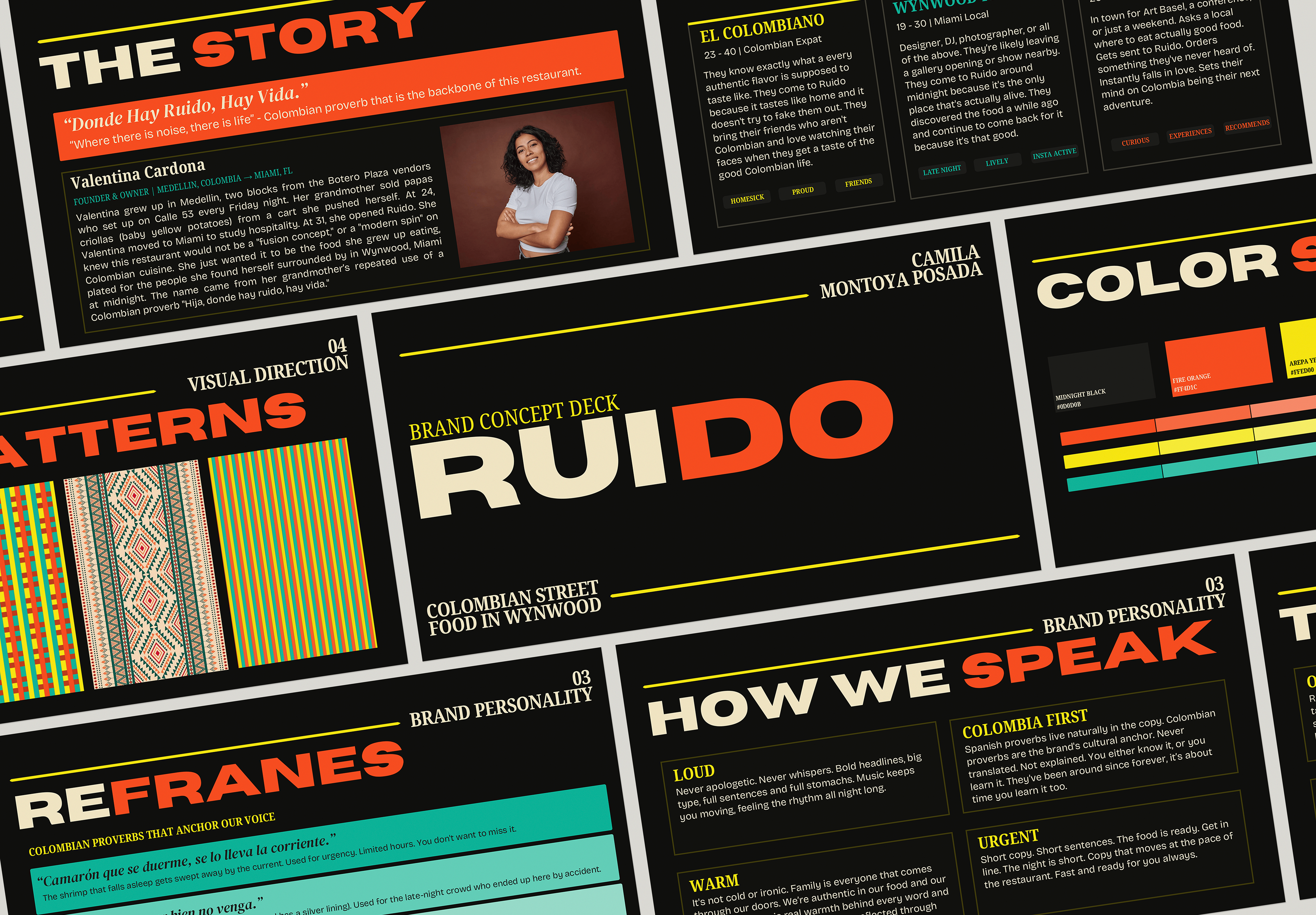
Ruido is a fictional late-night Colombian street food restaurant set in Wynwood, Miami. The typefaces, the colors, and the sayings printed on the coasters had to feel loud, warm, and unmistakably Colombian. The story behind this restaurant concept sets it apart from other late-night spots in the area: sayings, or refranes, that every Colombian would know and bring back a little taste of home. This project started with a concept deck that covers a lot of the strategy and the reason this fictional restaurant came about.
In Colombia, proverbs are not something that only your grandparents say. They are active, daily language used across every generation and, quite honestly, timeless. When a Colombian uses a refrán, they make a point and signal shared cultural membership at the same time. We can easily tell that someone who recognizes a refrán is inside the circle. The person who doesn't is invited to learn. That dual function is exactly what I wanted the Ruido brand to do: make the Colombian customer feel recognized, and create genuine curiosity in everyone else. Using them in the cookbook, on the coasters, and in the brand voice a strategic one to resonate with ruido's audience, not simply a fun idea or a stylistic choice.
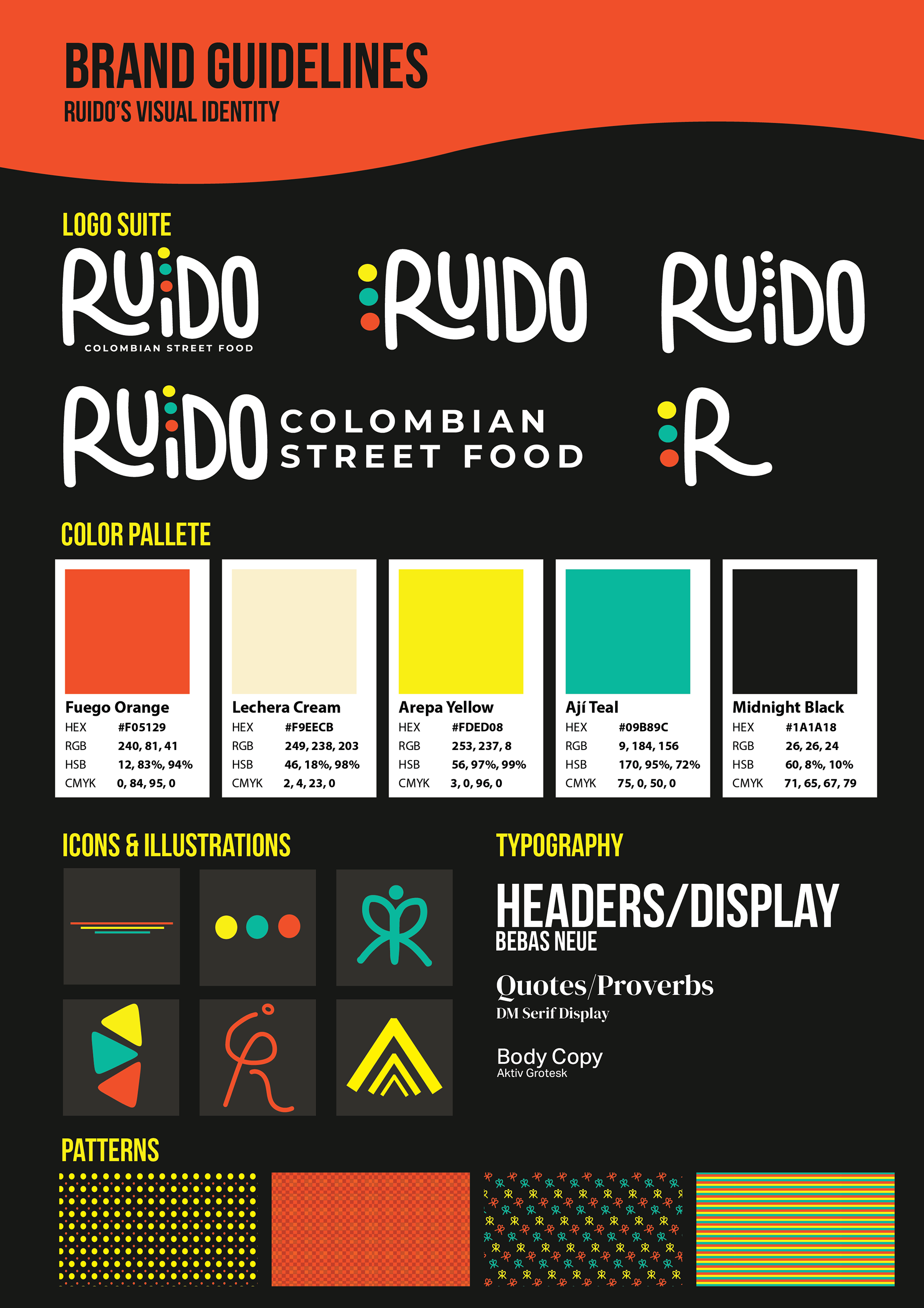
Ruido's visual identity is built on five colors: Fuego Orange, Lechera Cream, Arepa Yellow, Ají Teal, and Midnight Black. The names of the unique colors were inspired by different elements of Colombian cuisine.
The logo mark is a custom wordmark with three stacked dots replacing the "i" in RUIDO: one orange, one yellow, one teal. The three dots symbolize turning up the volume, the noise, the "ruido". The logo suite provides a lot of flexibility for the brand to be recognized in a variety of media.
The custom patterns and illustrations were inspired by different Wayuu weaving patterns. This is an indigenous tribe native to Colombia that plays a major role in the country's history. I wanted to capture a different aspect of Colombia, outside of the traditional stereotypes associated with the country.
As the final part of the branding, I created brand applications to showcase how the brand identity would live in the real world.
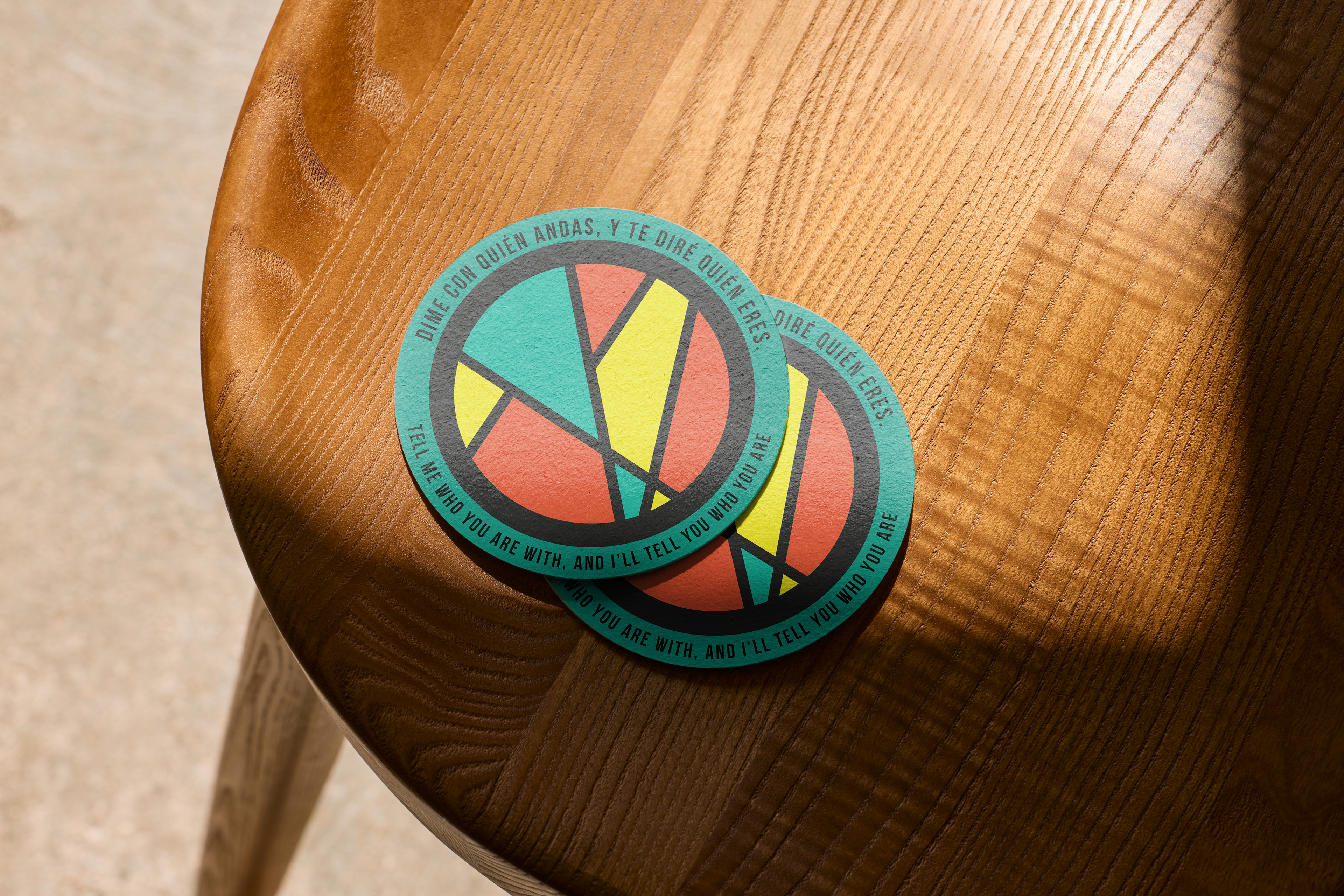
The coasters feature refranes (Colombian proverbs) that are integrated into everyday language. Every Colombian knows these phrases, which have been around and passed down for generations. Putting them on the coasters was a way to highlight these traditions and provide translations for the proverbs that are the backbone of the restaurant.
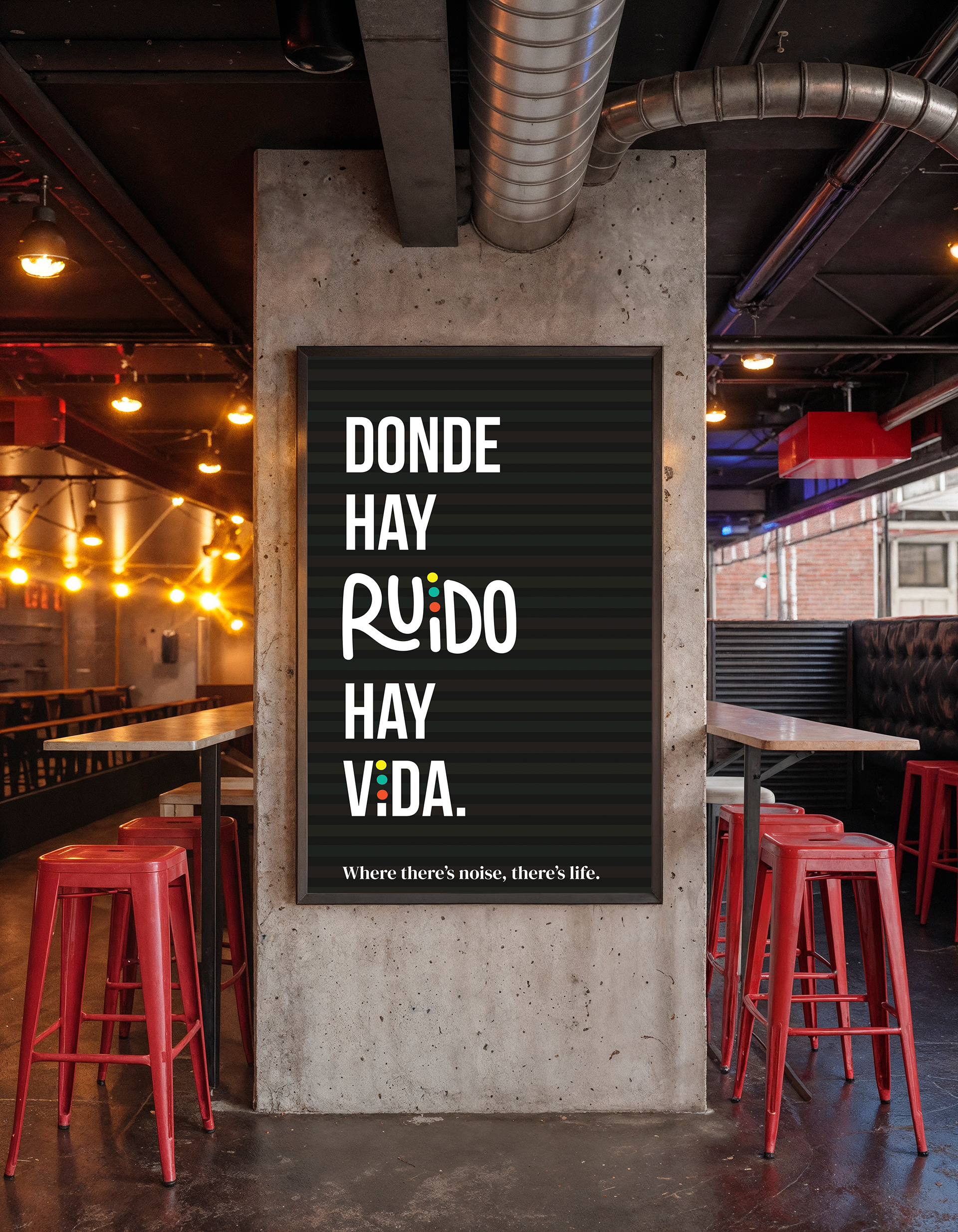
The in-store signage leans into late-night Wynwood energy: neon, bold type, and the bright color logic running through every surface. I wanted to capture what the restaurant's interior would feel like and provide an opportunity to fully grasp the space's atmosphere. You see the sign as soon as you enter the restaurant, and it immediately sets the mood for the night.
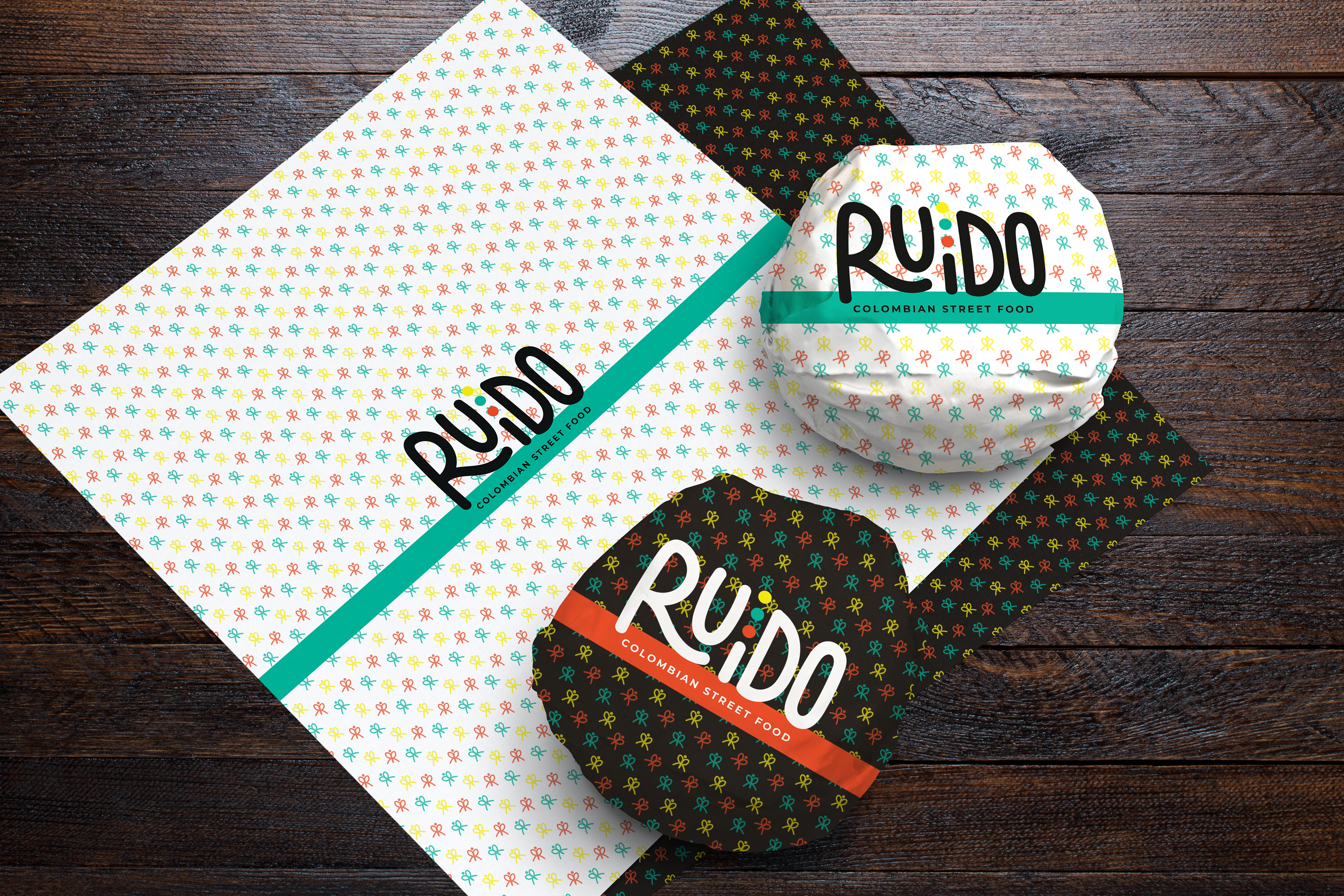
Lastly, the takeout packaging features Ruido's signature butterfly in a geometric pattern. The Kraft paper packaging is a staple at the restaurant since street food is meant to be on the street, but we also understand wanting to take some goodness home!
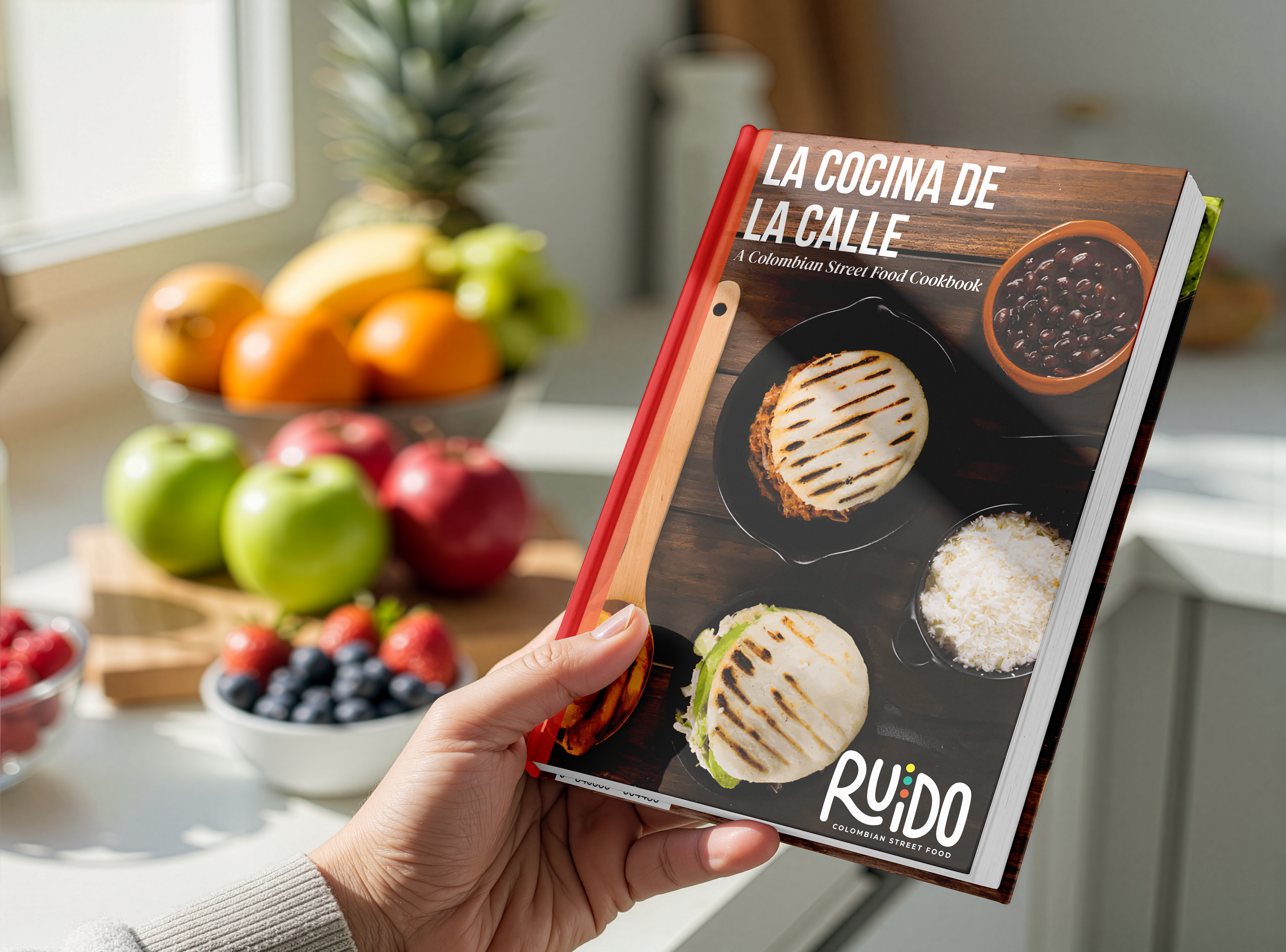
"La Cocina de la Calle" is the accompanying cookbook to Ruido's restaurant. It consists of 16 recipes, divided into 3 sections, from cities across Colombia. Every recipe lists its city of origin next to the name, because each dish has distinct ties to specific places in the country, not just "Colombia." The book is designed to feel bold, inviting, and easy to follow. Everyone can be a chef, and with Rudio's simple recipes, cooking has never felt so easy (and delicious). The sections are color-coded to follow Rudio's Colombian flag branding, which makes it really easy to pick out where your favorite recipes will be.
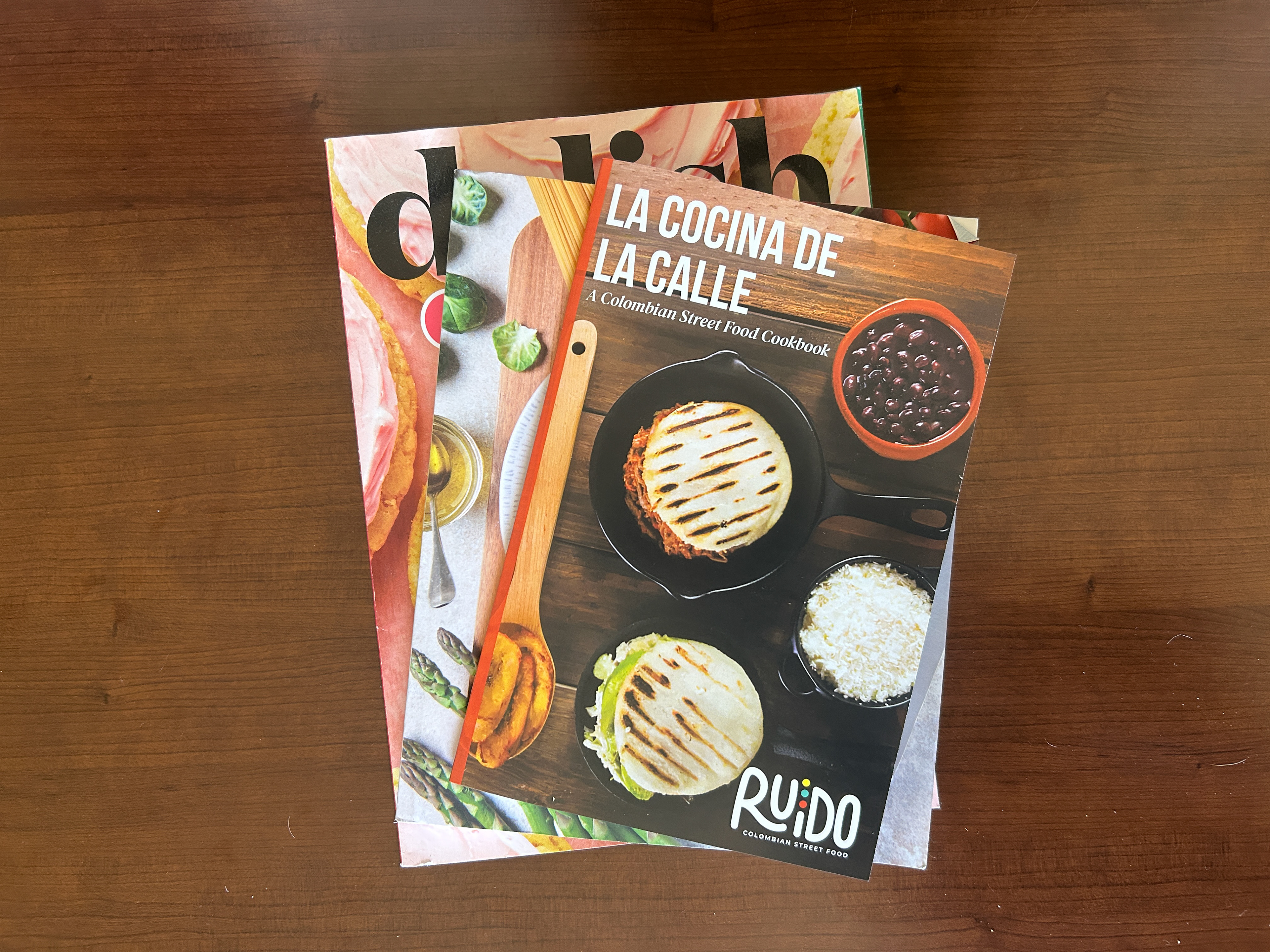
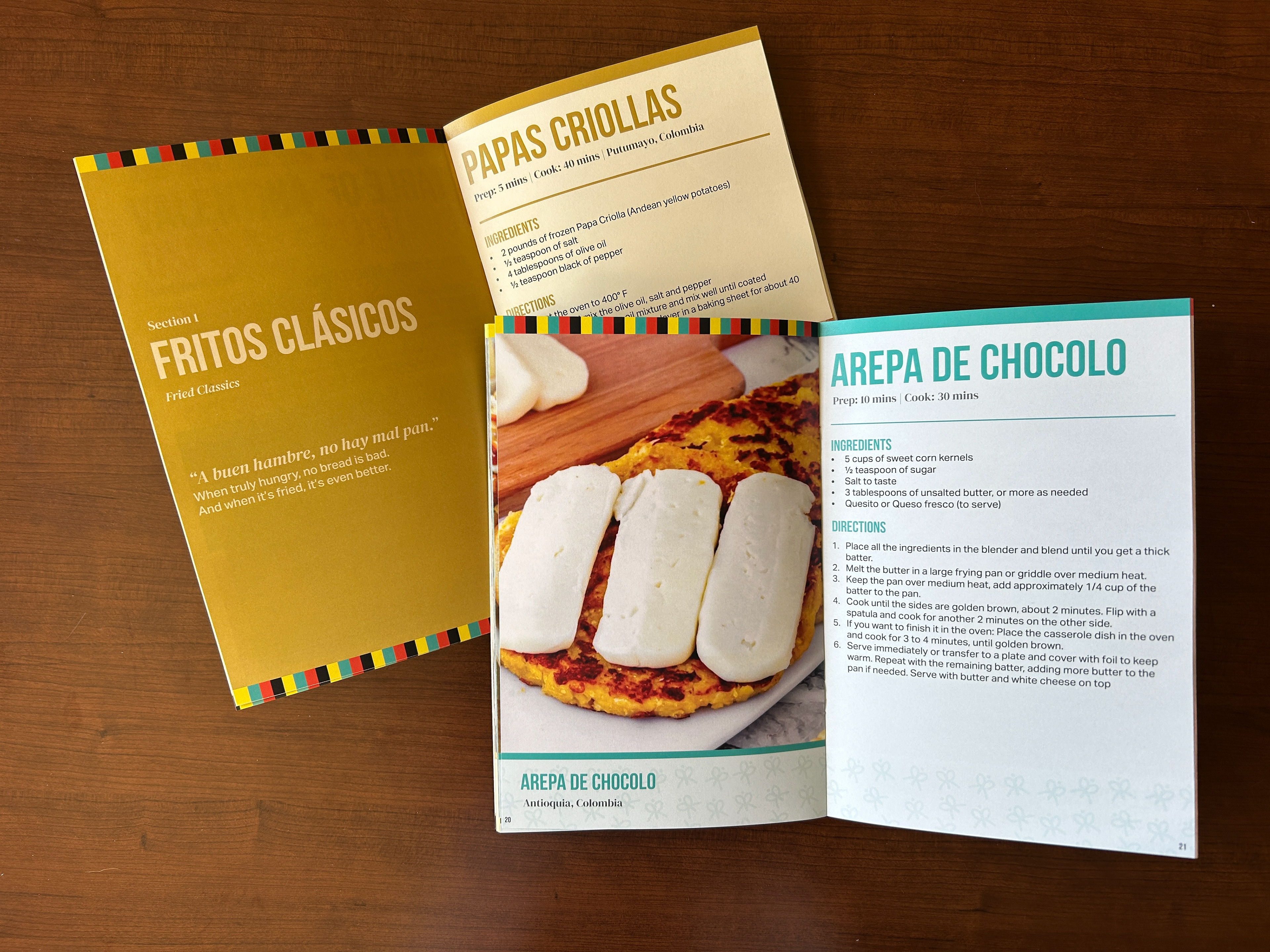
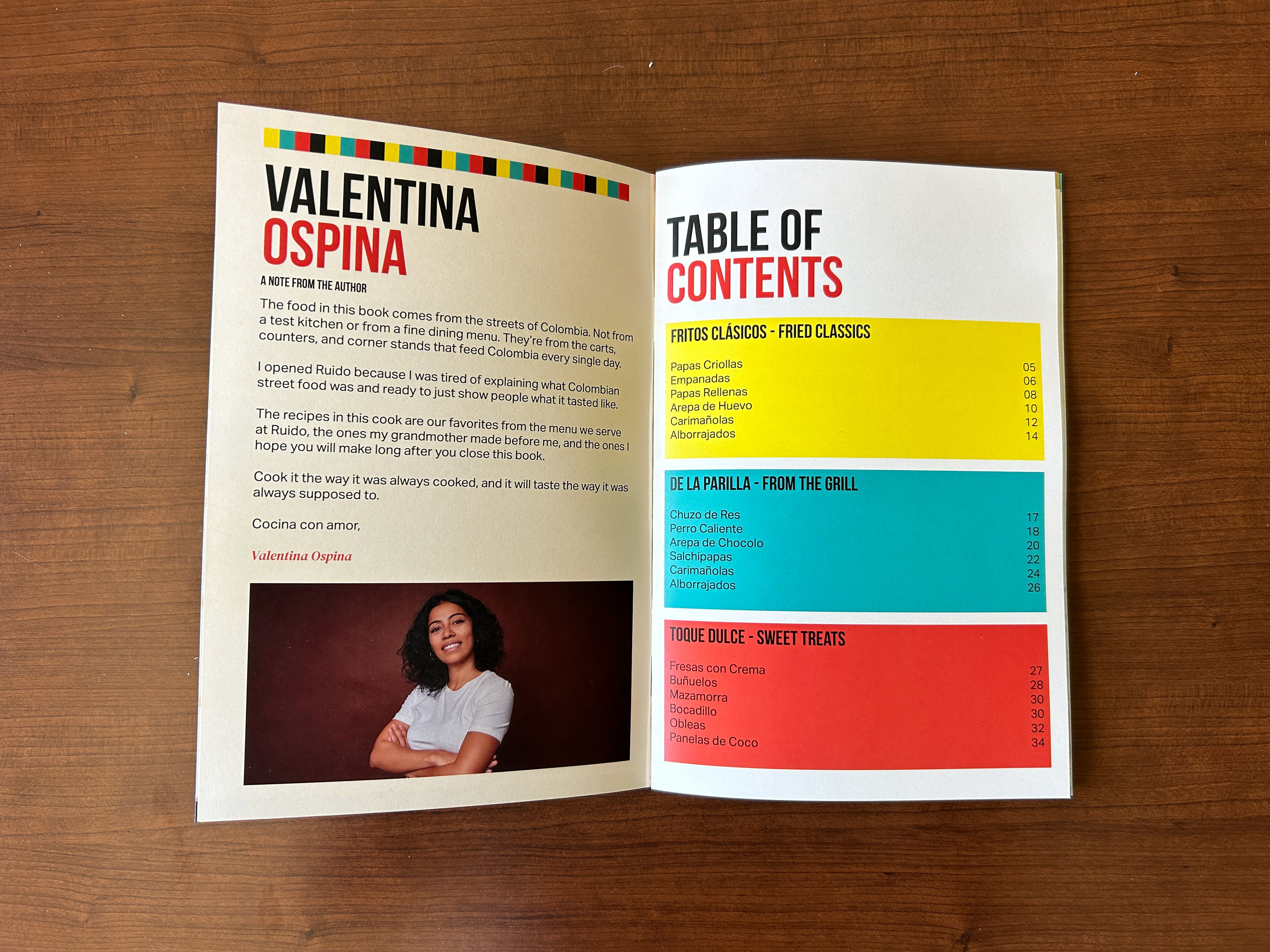
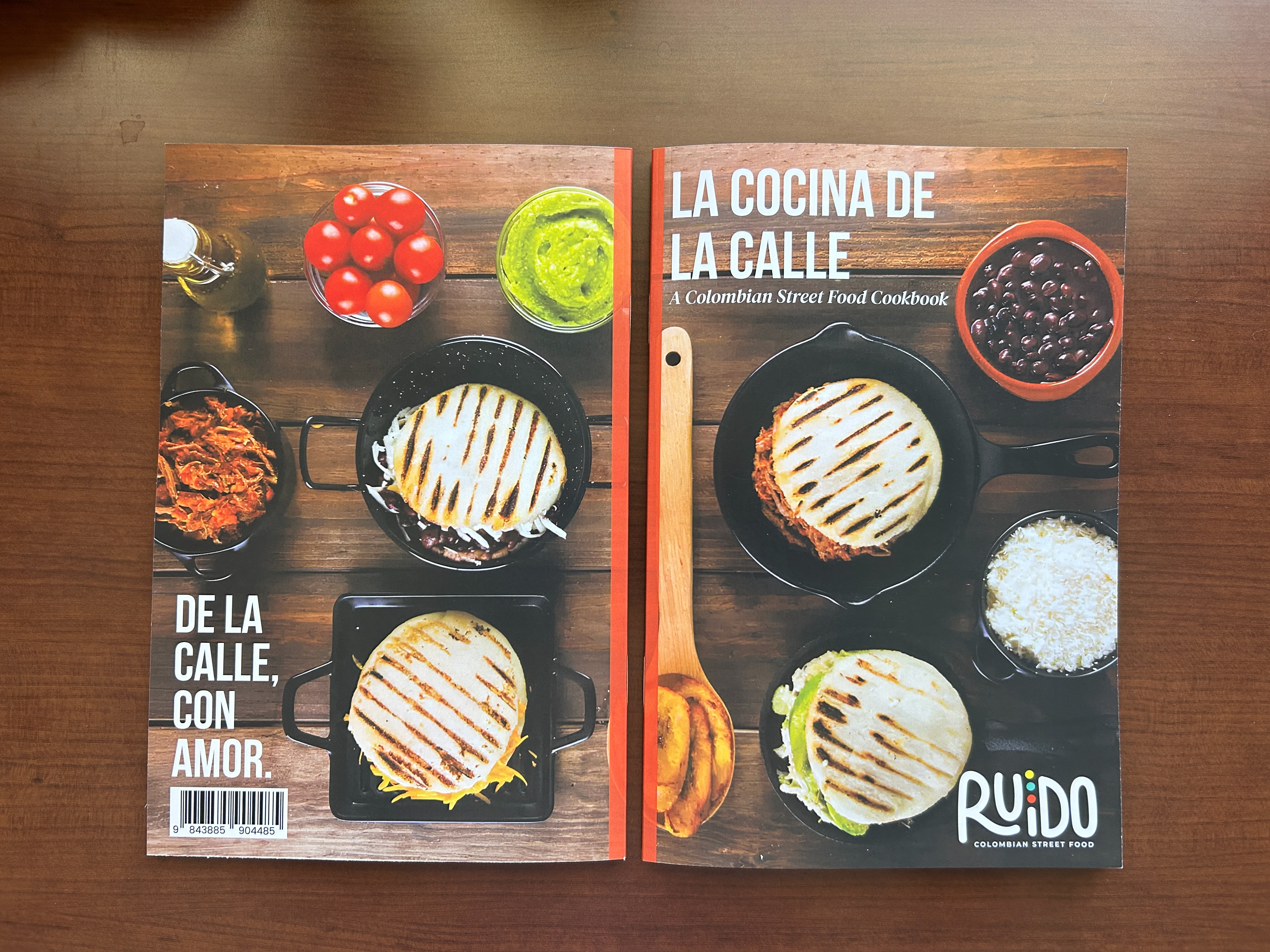
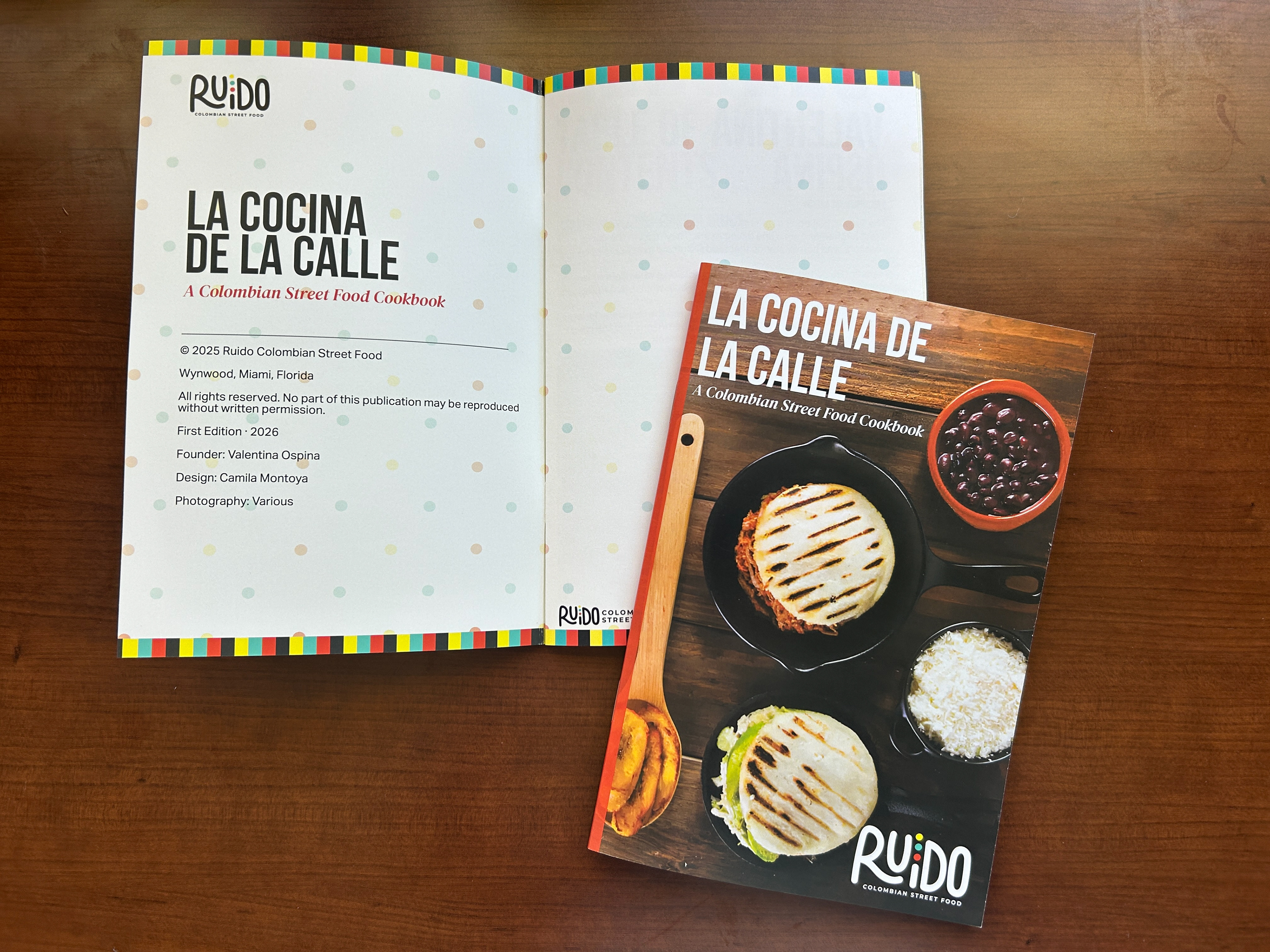
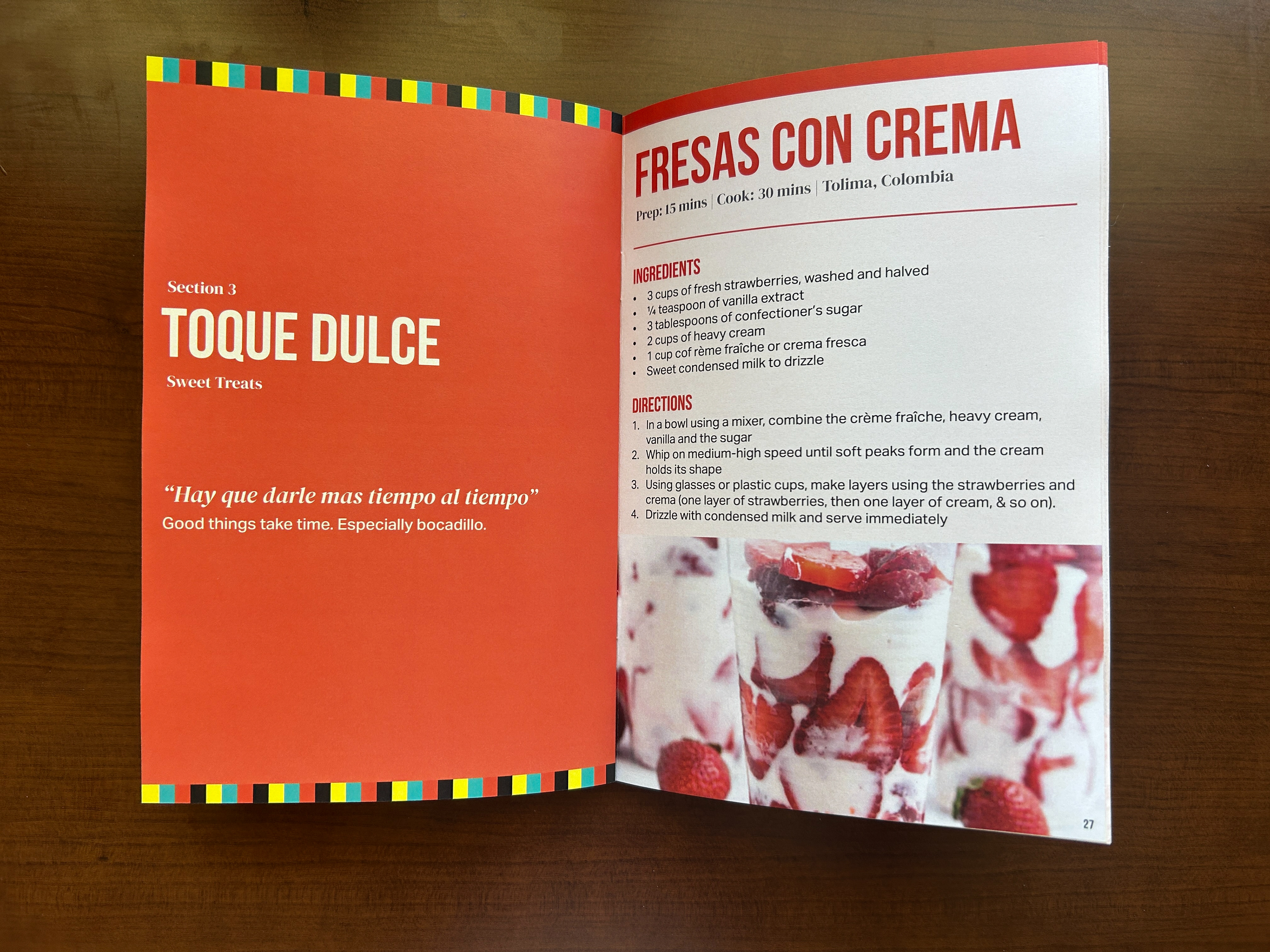
I designed most of the elements for the cookbook in Adobe Illustrator and used InDesign to lay them all out. I also printed the book using a professional print shop and photographed the finished piece by myself. The recipes and images using in the cookbook are from various sources across the web, which you can find by clicking on the process button at the bottom of the page.