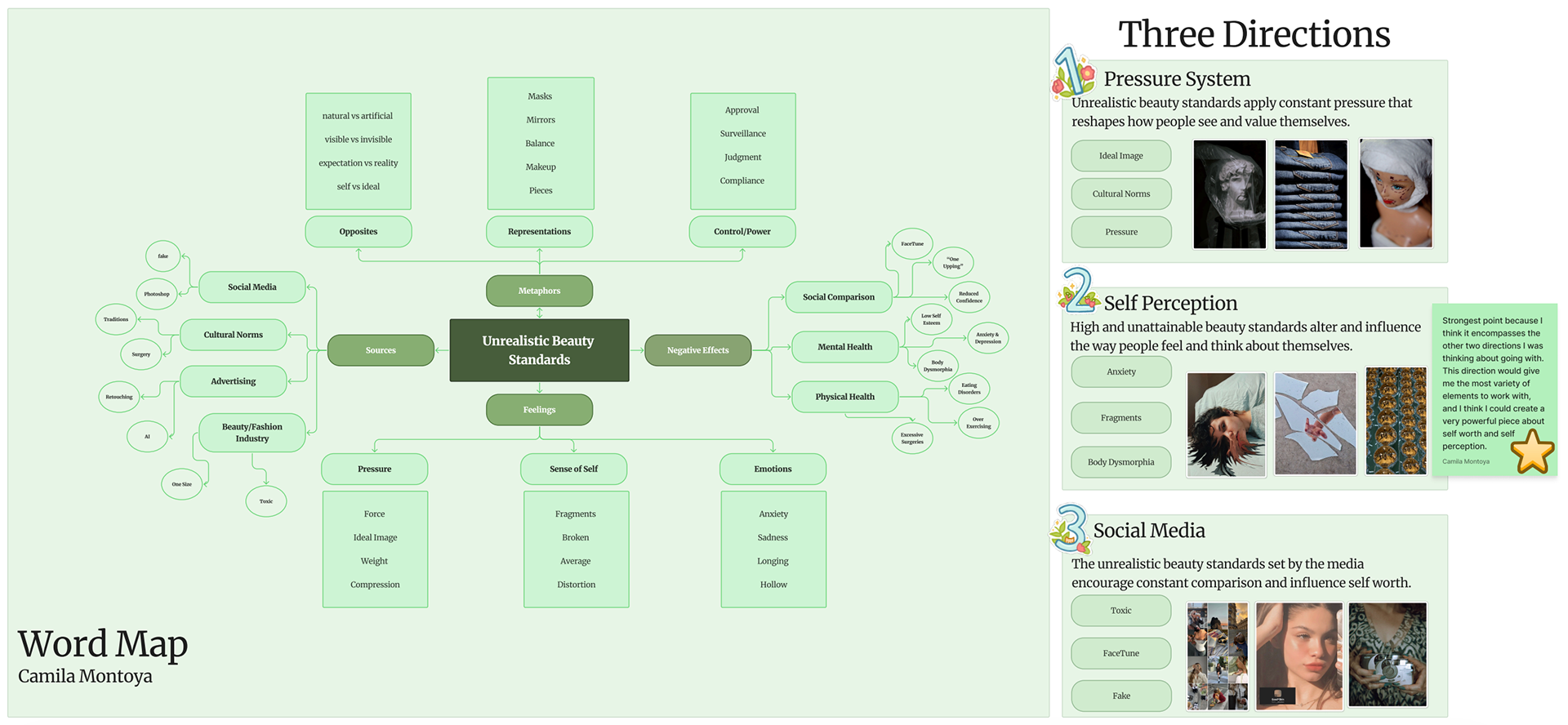
The process started with a mindmap, working outward from the core tension: what social media tells people they should look like versus how real people actually see themselves. That exercise generated the words, images, and directions that shaped everything that followed. I decided to combine directions 2 and 3, since they covered both sides of the coin: how people feel and social media's impact on that perception
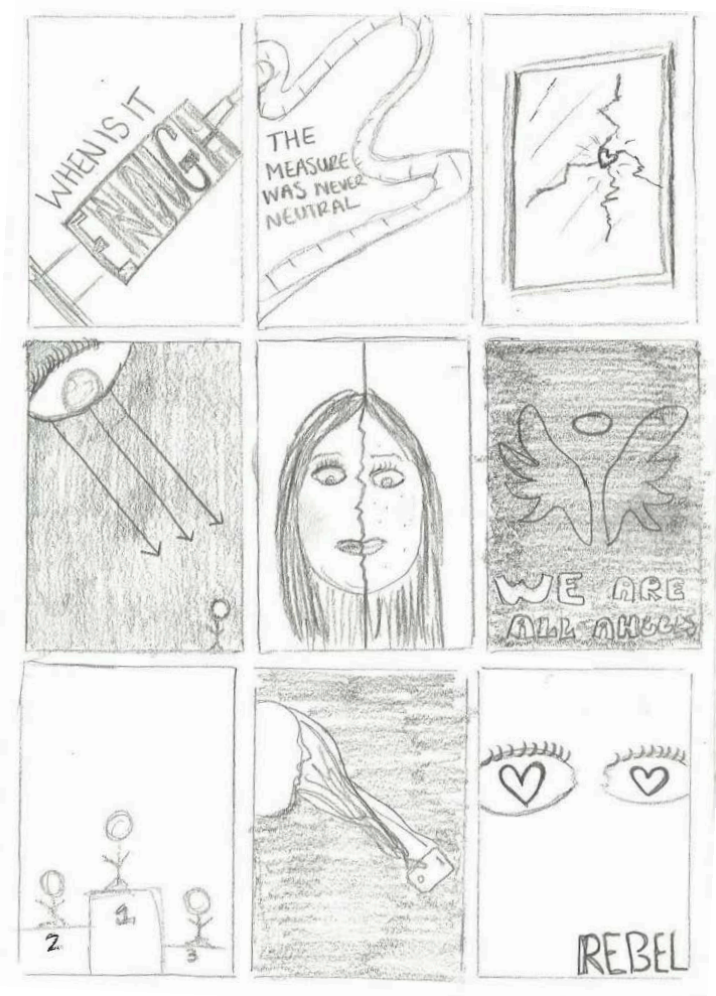
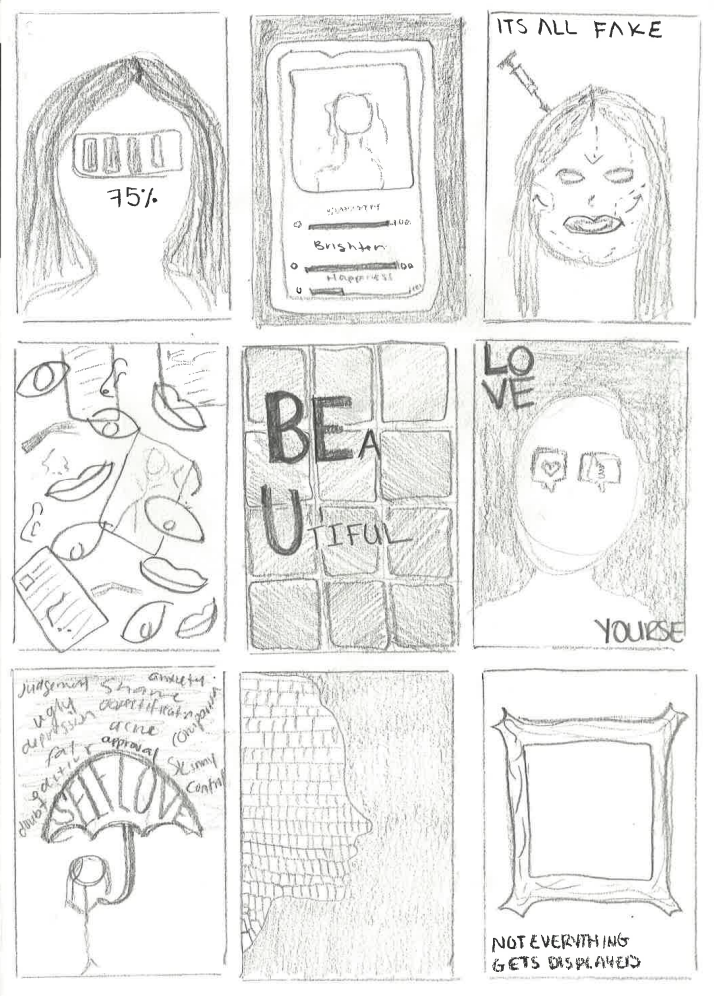
From the mindmap, I moved into sketches, exploring several visual directions. Two kept pulling at me.
The first was a broken mirror, a fractured self-image, the way comparison culture distorts how you see yourself. However, I felt like the broken mirror with a broken image felt too literal.
The second was a face being pulled or sucked into a phone screen, the physical and psychological weight of living through a device.
Neither concept was complete on its own. The broken mirror was too Literal. The screen concept felt like it leaned more into addiction than self-perception. The final concept combined them. A reflection in a mirror, warped into the surface of a phone, with a "like" button as the final element.
I used my roommate as the subject because the image needed to feel real, not staged. The final poster was built in Adobe Photoshop, compositing original photography with stock images to create the warped reflection effect. I went through a variety of edits and changes as the idea continued to develop.
The tagline, "Love Yourself," sits in direct contrast to the distorted image above it. At the bottom, I added Self Love in Hearts, an organization working to counter exactly the kind of messaging the poster critiques.
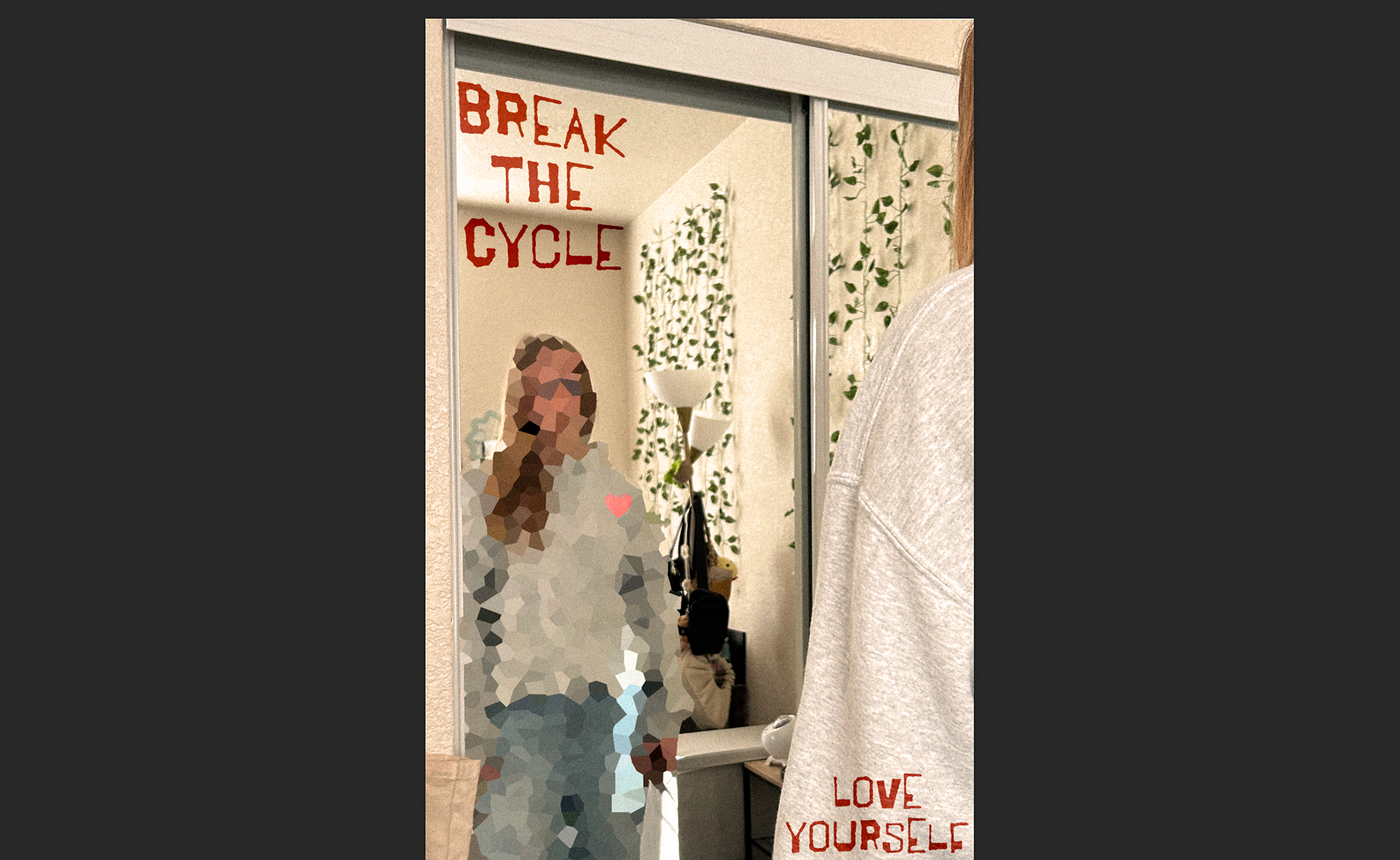
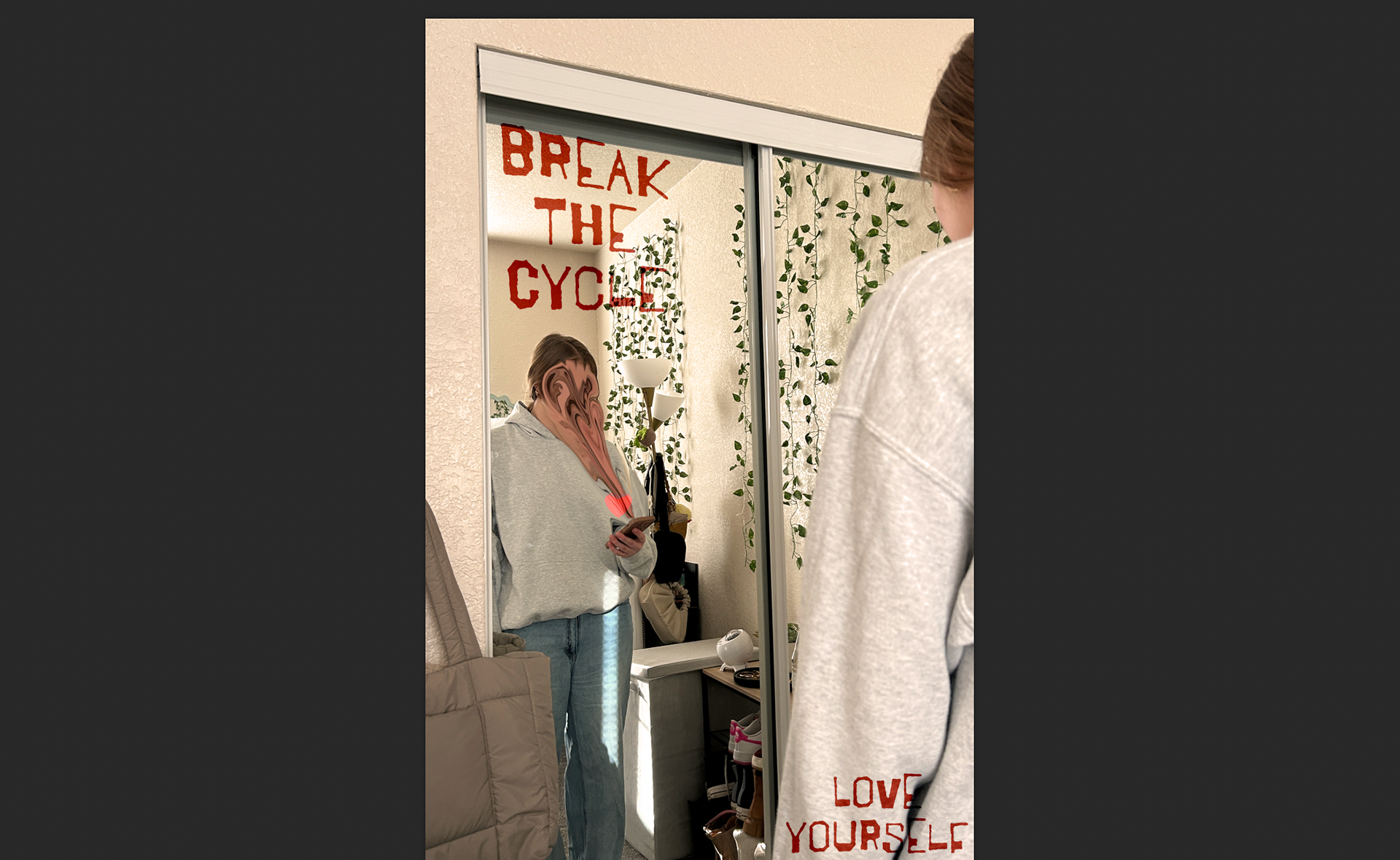
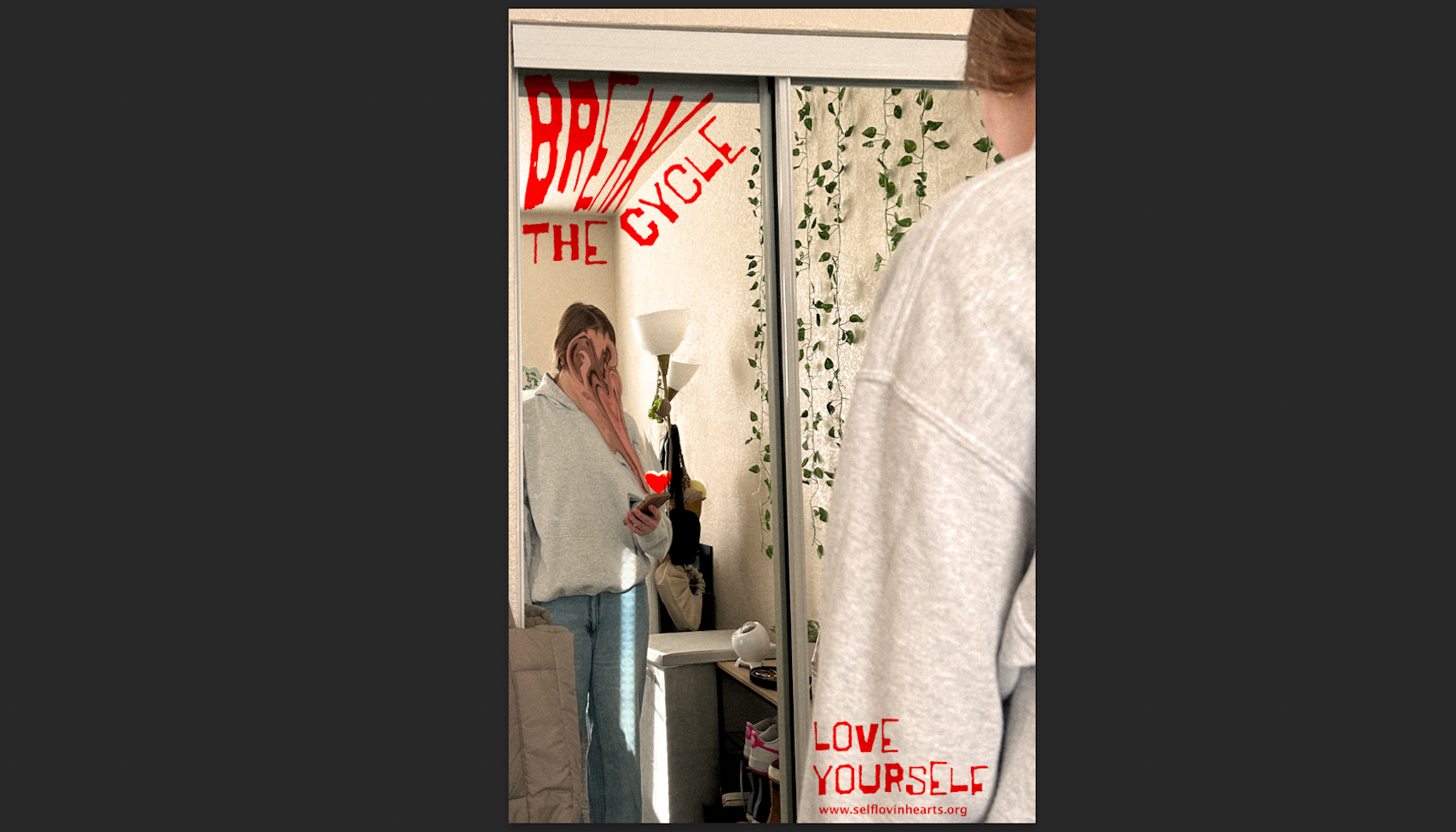
My selected message: high and unattainable beauty standards alter and influence the way people feel and think about themselves
Message slogan: Love yourself.
Selflovinhearts.org is an organization that helps people learn to love themselves in such a negative social media space.